As a volunteer at an animal shelter in Los Angeles, I’ve spent a lot of time with all kinds of dogs, some healthy and some not so healthy. Some of the dogs have had skin conditions, dental disease, eye injuries, spinal cord problems with difficulty standing and walking, and many have had some form of cancer.
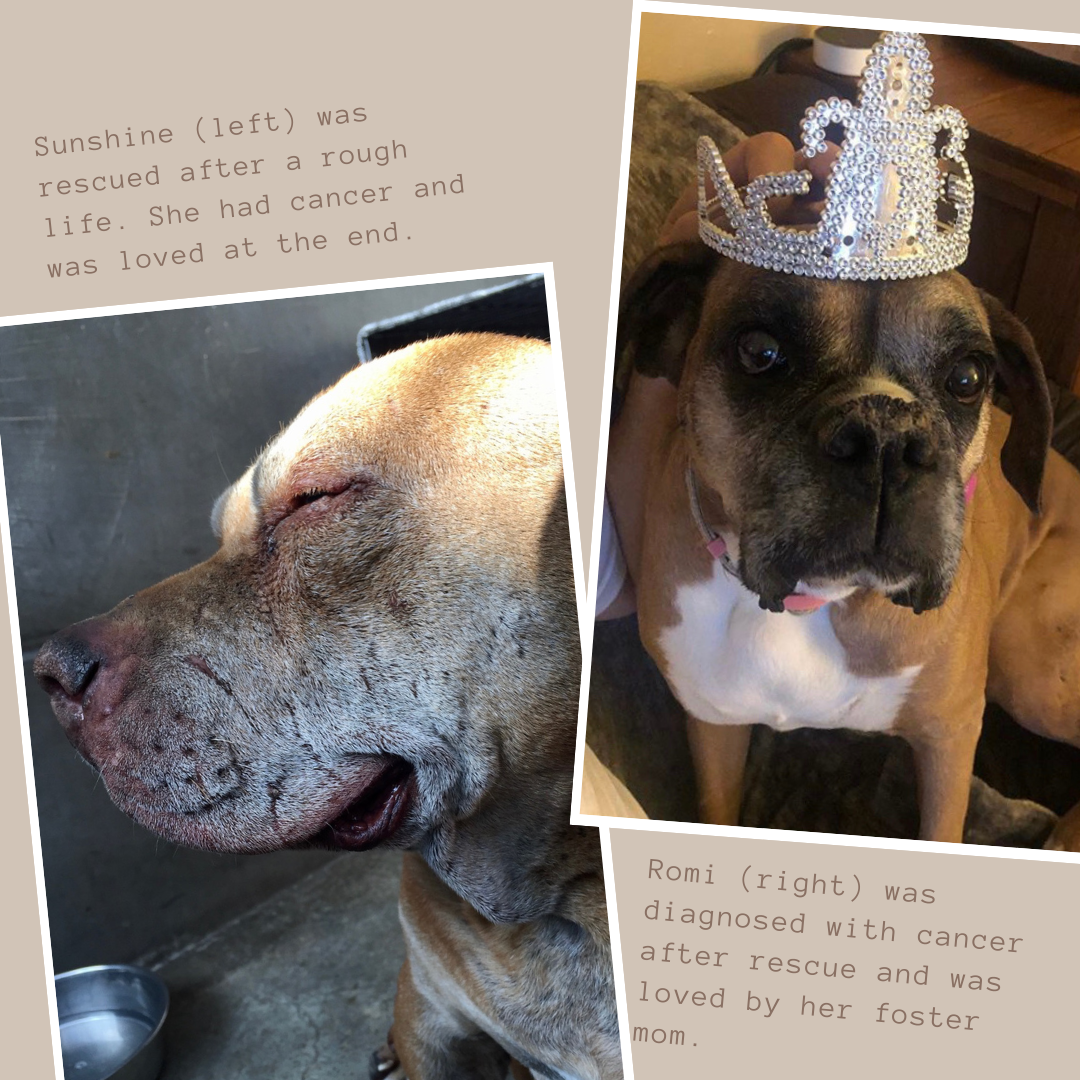
Some of my most favorite dogs have been diagnosed with cancer. Sadly, some have passed away, like Sunshine who was an outdoor guard dog at an auto shop her whole life. She came into the shelter when the shop closed down and it was quickly discovered that she had cancer throughout her body. She didn’t live long after she was rescued, but the end of her life was comfortable and full of love. Romi was rescued from the shelter just in the nick of time. Sadly, she was diagnosed with cancer recently, and passed away after spending time with her foster mom who became her forever foster.
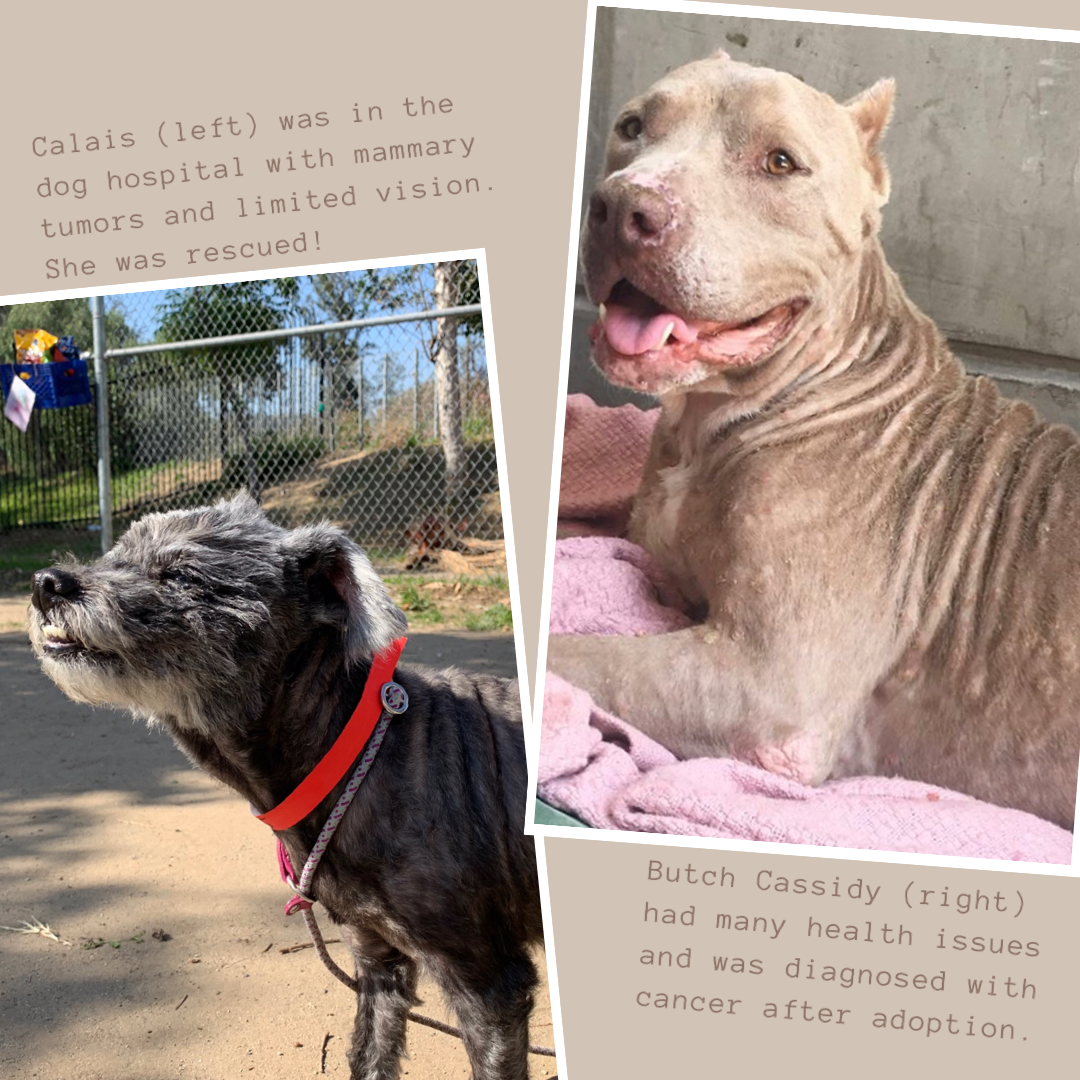
Calais came into the dog hospital with many mammary tumors and was also sight limited. She had surgery to remove her tumors, and was then rescued and adopted! Butch Cassidy was an unhealthy dog in the hospital and was lucky enough to have a person want him so much that she flew across country to adopt him. She drove him back and gave him a great loving life til the end.
Just like humans, dogs are also at risk for various type of cancers, with the most common types being breast, skin, bone, mouth/oral, connective tissue, and lymphatic tissues. For many dogs, cancer occurs in the later stages of life, but young dogs are still at risk. Cancer can be caused by a number of factors, including heredity, environment, and nutrition. Golden Retrievers, Boxers, and Rottweilers are some of the breeds which have been shown to be more prone to getting cancer, but there is no guarantee that any dog will or won’t get it.
Early detection is the key to successfully treating cancer, and there are things that pet owners can do to reduce the risks of their dogs getting cancer.
Prevention
Something that can be done early-on is spaying and neutering. Not only do these procedures help reduce the population of unexpected animals, but they have been shown to reduce the risk of mammary cancers in females and eliminate the risk of testicular cancers in males. Providing your dog with proper nutrition and a healthy lifestyle can help reduce the risk of many health issues.
Considering how environmental factors may put a pet at risk is important. For example, we all know the hazards posed by secondhand smoke and UV rays to humans, but they also put our pets at risk. Keeping dogs out of direct sunlight during the hottest part of the day, and staying out of smoke-filled rooms are things that can easily be done to help keep dogs safer. You can also purchase clothing made out of UV blocking materials and sunscreen specially made for dogs.
Signs and Symptoms
There are many different possible signs which may be associated with canine cancer or other serious medical conditions. These symptoms may include:
- Swelling of the abdomen
- Bleeding from orifices
- Breathing difficulty
- Changes in eating
- Mass or tumor
- Lameness or pain
- Wounds
- Skin changes, including bumps or discoloration
If you notice these, or any other changes in your dog, please contact your veterinarian immediately.
Mammary Tumors
About half of all tumors detected in female dogs are mammary tumors. Studies have shown that 45% of these types of tumors are cancerous. Mammary tumors are diagnosed during a physical exam, followed by a biopsy to identify the type, and possibly x-rays to see if it has spread. Surgery to remove the tumors is the most common form of treatment.
Testicular Tumors
Testicular tumors are commonly found in older male dogs who have not been neutered. While there is not one reason a dog will have these types of tumors, some factors may include whether the dog has been neutered, age, breed, and if he is a cryptorchid. Some dogs may show no symptoms, and some may experience swelling and masses on their testicles. Upon diagnosis by a vet, treatment may include removal of testicles, chemotherapy, or radiation.
Treatment
It’s important to discuss all treatment options with your vet so that you can make an informed decision on how to move forward. Treatment options will depend on many factors regarding your dog’s individual health situation, and may include surgery, radiation, and/or chemotherapy. Treating cancer will be different for each dog, and while the hope is to get rid of the cancer completely, for some, the goal may be to reduce pain and allow for a pleasant quality of life.
Ultimately, I want people to know that all dogs, whether in good health or not, are totally worthy of love. When you adopt a pet, it’s for life. A diagnosis of cancer or other another health issue shouldn’t be a deterrent for adoption or a reason not to keep your pet. Sadly, many people surrender their pets because of the high costs associated with medical bills. Please know that financial help may be available to you to assist in paying for medical expenses, so I urge you to reach out to your local shelter, vet, or community organization to ensure that you are informed about the help that may be available.
Clinical Testing
I found this article “Helping Dogs—and Humans—with Cancer: NCI’s Comparative Oncology Studies” about clinical testing (safely done with permission by pet owner) in dogs with cancer to be quite interesting. It kind of hit home to me, as my dad was part of a clinical study testing a medication for terminal cancer patients, with the goal being to keep the patient alive for six to nine months. The drug did just that, and I know that my dad was glad to be a part of something so important.
Sources:
https://www.merckvetmanual.com/reproductive-system/mammary-tumors/mammary-tumors-in-dogs-and-cats
https://vcahospitals.com/know-your-pet/neutering-in-dogs
https://www.merckvetmanual.com/special-pet-topics/cancer-and-tumors/reducing-the-risk-of-cancer
https://www.merckvetmanual.com/special-pet-topics/cancer-and-tumors/
https://vcahospitals.com/know-your-pet/testicular-tumors
https://www.avma.org/resources/pet-owners/petcare/cancer-pets
Disclaimer: I have no type of vet background and nothing you read here should be taken as veterinary advice. If your pet is experiencing any type of medical emergency, contact a veterinarian right away.
 Rescue All Dogs